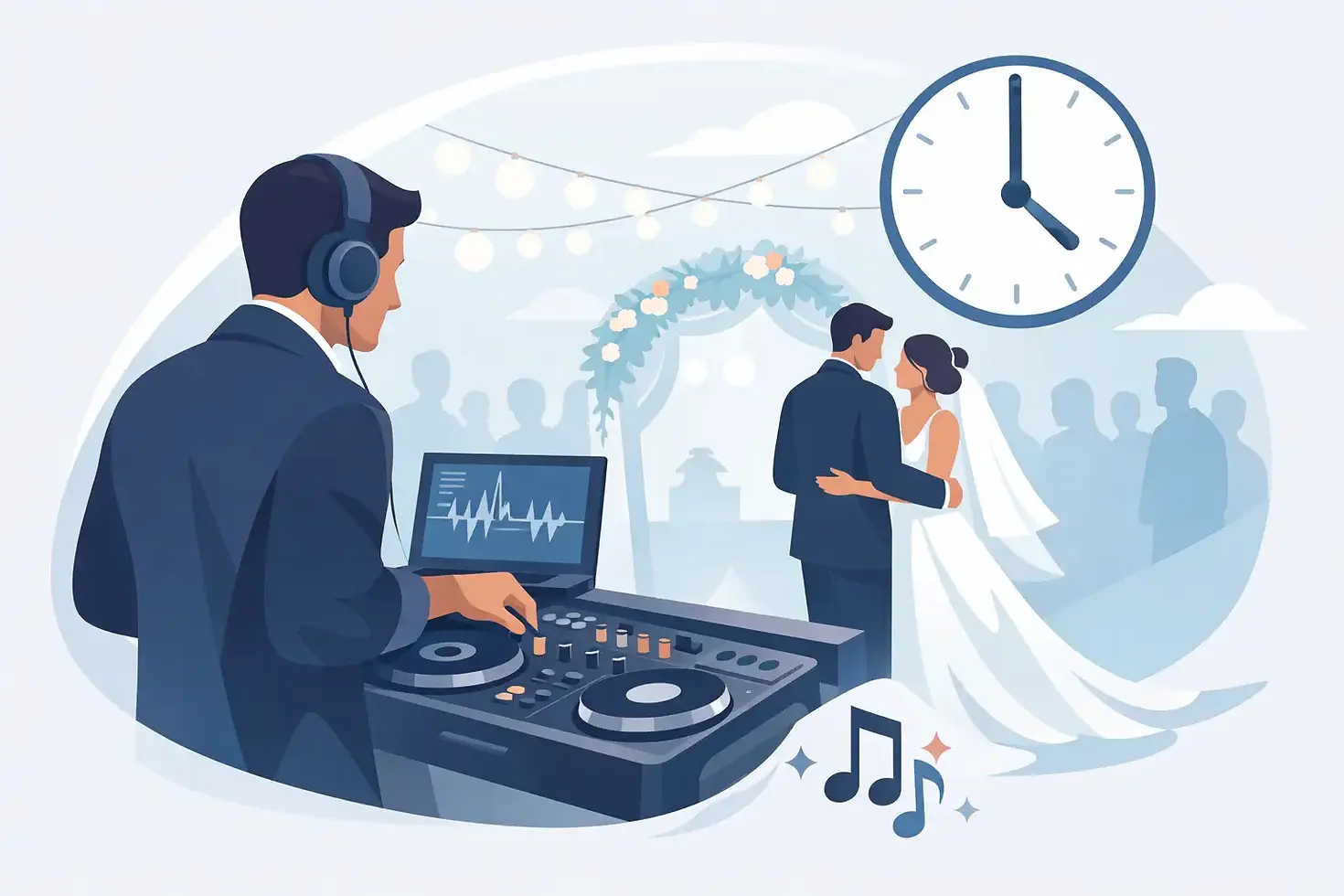
When Should Wedding DJ Start?

A wedding can feel flat long before anyone notices why. Usually, it is not the flowers, the food or the lighting. It is the timing of the music. If you are asking when should wedding DJ start, the short answer is this: earlier than just the dance floor, but with the right energy for each part of the day.
A lot of couples picture the DJ arriving right before the party kicks off. That works for some receptions, but most weddings feel better when music is shaping the atmosphere from the moment guests begin to gather. The key is not starting loud. It is starting smart.
When should wedding DJ start for a wedding?
For most weddings, a DJ should start during pre-reception drinks, canapés or guest arrival at the reception venue. That might be 30 to 90 minutes before the bridal party entrance, depending on your timeline. This part matters more than people think because it sets the emotional temperature of the room.
If guests walk into silence, the space can feel awkward, even if the styling is beautiful. If they walk into music that suits the moment, everyone relaxes faster. Conversations flow, people grab a drink, and the whole event starts to feel intentional rather than pieced together.
That does not mean your wedding DJ needs to treat canapés like a nightclub warm-up. Background music at this stage should have personality without stealing the spotlight. Think feel-good, social, lightly upbeat tracks that suit your crowd and your venue.
The best start time depends on your wedding format
There is no single perfect answer because weddings are rarely identical. A city venue with a tight run sheet feels different from a garden wedding with a long golden-hour drinks service. The right start time depends on what your guests are doing and what role music needs to play in that moment.
Ceremony only
If you only want a DJ for the ceremony, the music should usually begin 20 to 30 minutes before the ceremony starts, as guests arrive and find their seats. This helps settle nerves and fills those little gaps while everyone gets into place.
In this setup, the DJ is not just pressing play on a processional song. They are helping shape the lead-in, the aisle moment, the signing, and the exit. Good ceremony timing feels effortless, but it only feels that way because someone is watching every cue closely.
Ceremony and canapés
If your DJ is covering both the ceremony and post-ceremony drinks, it makes sense for them to be set and ready well before guests arrive. That means music can begin before the ceremony, then flow naturally into canapés afterwards without a dead patch while equipment gets moved or switched over.
This is one of the smoothest options because the energy builds naturally. Guests hear a cohesive sound from the start, and you avoid that stop-start feeling that can happen when entertainment begins too late.
Reception only
If the DJ is booked just for the reception, starting at guest arrival or canapés is usually the sweet spot. If your reception begins at 5.30 pm, that does not mean music first appears at 8.30 when dancing starts. It means the DJ is already helping create atmosphere while guests mingle, sit for dinner and move through formalities.
That said, there are exceptions. If your venue already has curated background music for dinner and you only want a dedicated dance-floor set, a later start can work. It is just worth knowing that you may lose some continuity and some control over the feel of the room.
Why starting too late can hurt the vibe
The biggest downside of a late DJ start is not technical. It is emotional.
When music only begins once the formalities are over, the reception can feel like two separate events stitched together - dinner first, party later. Sometimes that contrast works, but often it makes the dance floor harder to launch because guests have spent hours in a low-energy setting with no musical build.
A good wedding DJ reads the room all night, not just once people are ready to dance. During canapés, they are gauging age groups, personalities, cultural mix and how relaxed or reserved the crowd feels. During dinner, they are watching whether guests are happy to linger, starting to buzz, or itching for something more upbeat. That information shapes a much better dance set later on.
Starting earlier also helps with practical flow. The DJ can manage microphones for speeches, coordinate key moments with the venue or MC, and keep the energy stitched together between formalities. That tends to reduce awkward silences, rushed transitions and those strange patches where nobody seems quite sure what is happening next.
What the music should do at each stage
This is where couples sometimes get stuck. They hear “start earlier” and worry the whole wedding will feel overcooked. It will not, if the music matches the moment.
For guest arrival or canapés, music should feel welcoming and easy to chat over. Acoustic covers, soul, soft pop, indie favourites, funk and relaxed dance edits can all work beautifully depending on your style.
For dinner, the energy usually sits in the middle. This is not the time for bangers, but it should not feel sleepy either. The right dinner set keeps the room warm and connected, especially between courses and speeches.
Then, once formalities are done, the gear shifts. The dance-floor set lands better when it feels earned. Guests have already been carried through the day by music that made sense, so the jump into party mode feels exciting rather than abrupt.
When should wedding DJ start if you want a packed dance floor?
If your goal is a proper dance floor, not just polite swaying near the bar, the DJ should usually be involved before dancing begins. Ideally, they are part of the reception from guest arrival or at least from the start of dinner.
That gives them time to build trust with the crowd. People often dance more freely when the music has already become part of the evening, rather than arriving as a sudden change of agenda. It feels less like, “Okay everyone, now you must party,” and more like a natural next step.
This is especially true for mixed-age weddings, which is most weddings. Nan wants something familiar, your cousins want singalongs, your mates want heaters, and someone will absolutely ask for a left-field throwback. The best dance floors are not built on random requests. They are built on smart pacing.
A few timing examples that work well
If your ceremony is at 4.00 pm and reception drinks start at 4.30 pm, your DJ may start guest-arrival music around 3.30 or 3.40 pm, then continue through canapés, dinner and dancing.
If your ceremony is elsewhere and the reception starts at 5.30 pm, having the DJ begin around 5.15 or 5.30 for guest arrival usually works well.
If you are having a very relaxed wedding with a live acoustic set first and DJ later, the DJ might begin after dinner, but they should still be set up and coordinated well before the dance-floor launch.
At Nel Amore events, this kind of pacing is often what makes the difference between a nice night and a genuinely electric one. Guests do not remember a run sheet. They remember how the room felt.
Questions to ask before locking in your DJ start time
The easiest way to land on the right timing is to talk through your run sheet honestly. Ask yourself whether you want music during guest arrival, whether speeches need microphone support, whether the ceremony and reception are in the same place, and how important a strong dance floor is to you.
Also think about your guests. If you have a social crowd who love a long drinks hour, early music matters. If your reception is very short and tightly scheduled, continuity matters even more. If your crowd is a little shy, they often need a gentler build across the evening rather than a dramatic late push.
Budget can influence timing too, and that is fair. If you need to prioritise, I would almost always choose broader coverage with well-managed lower-intensity music early, rather than booking fewer hours and expecting instant magic once dancing starts.
The best wedding soundtrack does not begin at the dance floor. It begins the moment your guests need to feel something - welcomed, relaxed, connected, excited. If you plan your DJ start time around that, the whole day tends to breathe better.


Comments